
New Serial Fiction
~A noir maritime drama

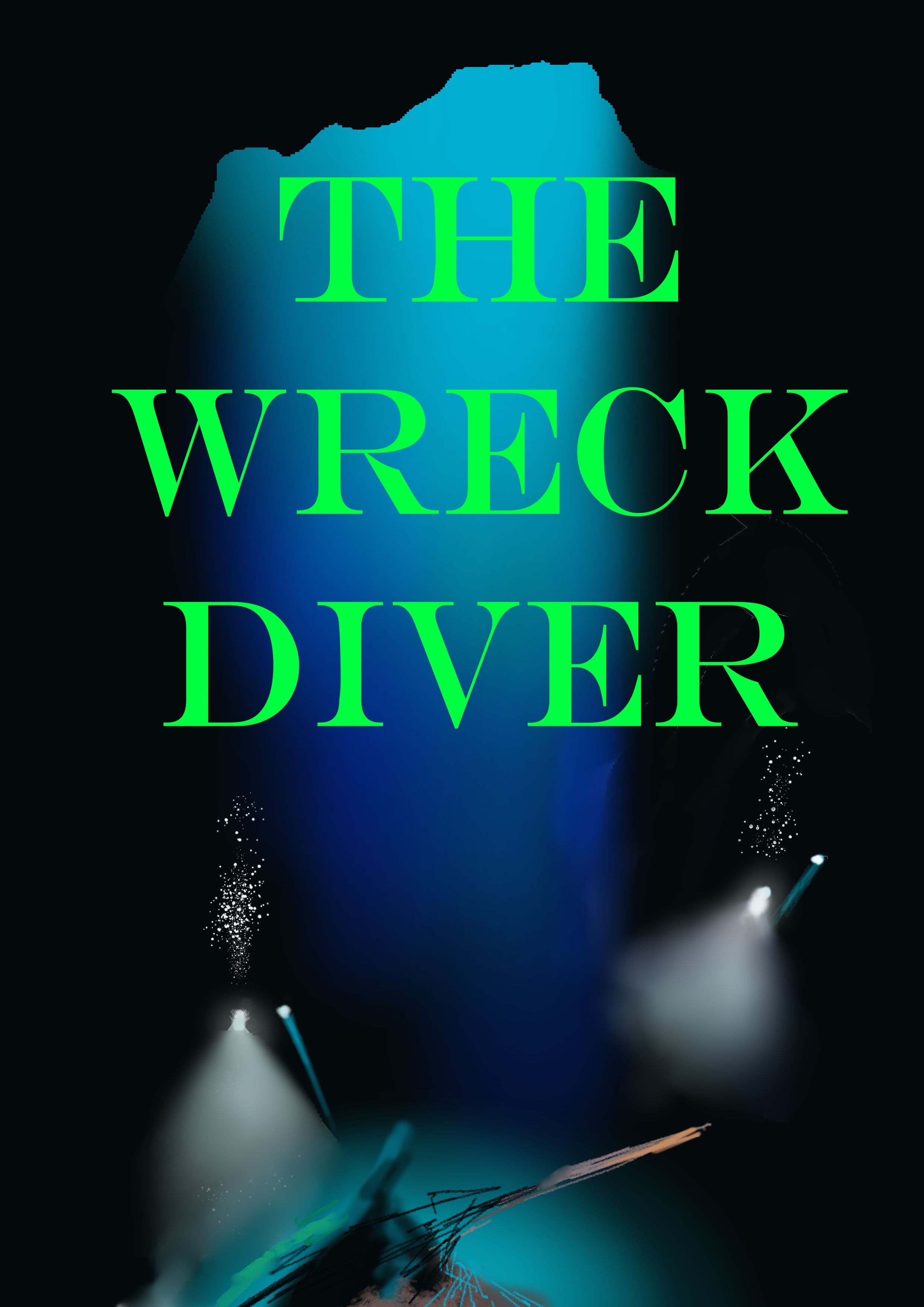
Set off the coast of Marseille, a deep-water archaeological dive fractures under the asymmetries of power, intimacy, and moral compromise.
Prologue
You did not weep for her—how poignant, how stygian your turning away from us. Nothing could blot out the hazards, but bringing you in ended us all. We were not privy to the conversations that determined outcomes. Whose unseen hands blackened the consequences? Was it not a sea god come to punish us?
Beautiful, what they found her clutching. When they pried the artifact from her hand, they managed to extract it whole, but not without breaking two of her fingers. Yet this effort was ineffectual. What was needed was more discernment, not more force. When they set up their paltry tents on the beach, a mournful sight, her bedraggled effects were steeped in brine, already the lodgings of diminutive sea life. It fell to Forensics to classify and bag these poor proofs of her brilliance. Another week would pass until the identity was confirmed.
A quirky thing, identity.
I knew how she saw herself. For years, the Marquesa had sailed alone. She impressed clients with her ideas and ambitions, unable as they were to see the fine print of her character, her training. Chameleon-like identities, forged or assumed, she meant different things to different people, and her sloop was often gone before anyone realized. Fast and discreet, these were her attributes.
I knew how she saw herself. At night, she exchanged rough hemp, steel and leather for exquisite lawn and voile. Draped in grey pearls and silver chain necklaces, she indulged her taste for the lavish and sensual. She smoked with the poets, who watched her sip Tokay. Now with this or that paramour, now winning at her games of conquest or chance.
In her, no opponent ever saw their defeat coming. The feint was always exquisitely appropriate. Her network of informants kept her well-stocked with damning revelations. Her dossiers were insightful, and had she not leaned so heavily on her more entrepreneurial proclivities, she might have avoided him. His name was James Naxos Finlund.
Finlund was well known along the coast, and this wreck held a great bounty.
—I want a closer look, the Marquesa said on the very first visit to the site. You would remember that.
Taking on this dive was a digression she could scarcely afford, but after the last commission, she felt she was entitled to an adventure, some kind of reward. It’s the sort of thing the two of you often did in your lives, and in the dark water you moved as one. You trusted each other more than anyone else.
—This wreck, Marquesa.
Finlund turned toward her, though his eyes stayed fixed on the horizon.
—What of it?
—It’s not safe.
—No wreck is safe, but you should know it’s hardly my first dive. I’ve plumbed many fathoms of seawater.
—Then it’s of no consequence, I suppose, that I tell you we should abandon this foolish venture.
—None.
The Marquesa was fully cognizant of the risks, but it was mapped out—over five million in bullion. When did you know you could not save her, that you would betray her? The two of you must have descended, careful not to lift silt, not to get lost, but in the end, she was left behind, snagged, to face the laryngospasms alone. It could have been one of them, but if it was Finlund, damn him for a thief and murderer.
The note they found in the pocket of her suit was illegible, almost blank. She was not to blame for what happened, not the one who made you what you are. She was intrepid, and the one, after all, who tried to put so many sea miles between herself and failure. Sometimes I think she died years before, if you want to know the truth. When she took the demon’s bait. When she stopped listening for danger.
They say it was the churning typhoon that washed you up, a freak occurrence, this buoyancy.
Chapter one
After being confined for nine hours in a plane, it felt good to be on land. I’d had business to take care of in Chicago and wound up spending more time than I wanted. Nothing made me feel more myself than being here at the seashore. I got closer to where the waves were breaking and let the water rush up my calves and wet my dress. No one would mind if I just took it off and waded around in my underthings. There was dry, straggly seaweed that hissed faintly in the wind. Its deep red color was lustrous like few things I’d seen above the water. I picked up a little clump of it, and saw a tiny swirling shell tethered to it.
Out to sea, there were only a few ships, ugly modern ones, and not many sails. Marseille had such an eventful maritime past that many ships had gone down. When the call came, I jumped at the chance to see this new and unusual wreck that had been uncovered. I wasn’t rested enough from the last project—true enough, but I was going to make it work.
Close to five pm, time to head back to the hotel and dress for the dinner with Mr. Jean-Baptiste Gaillard, my client. I’d forgotten to call Robert. Not that he worried about me, but I said I would tell him when I landed. I liked to indulge his occasional overprotective impulse because it was just how he showed love; he wasn’t the type to compliment my attractiveness. For the record, I knew what I looked like without him telling me.
He picked up on the third ring.
—Good morning.
—You made it in one piece.
—I slept on the plane. You good?
—It’s going okay, I think. I’m just getting through the midsection, the part about ship construction methods. What’s up?
—Quick question. Have you booked a flight yet?
—Uh huh, for two weeks from yesterday. Why?
—See if you can move it up. I might need my favorite historian here earlier. I’ll explain after I talk to Gaillard.
—I thought I was your only historian. Are you telling me I have competition?
—Ha. I’ll call you around five, your time.
—Okay. Shouldn’t be a problem. Looking forward to hearing about the Marie-Caroline. Good luck.
Back at the hotel, I looked at the maps of the waters off the Calanques massif, where the wreck had been found. The client was to explain precisely what he wanted, and to supply me with a diver. The rumour was that it would be Finlund, who I’d never met, but like everyone else, I’d heard plenty about him and his family’s ship, The Merriweather. He was known for being a great wreck surveyor as well as a recovery diver, but I had heard certain rumors that he took private contracts when the spirit moved him and knew how to move artifacts fast. We had that in common; all the more reason to be cagey. I would have preferred to work with Bobby Martin, but from all accounts, Bobby would never dive again after his second accident in twenty years. It gutted me to hear of him staggering around, dropping and forgetting things like an old man. Bobby was the same age as Robert—only a few years older than me. Gaillard chose Finlund, so it was going to be Finlund.
I took the elevator to the roof and was pleased to be shown to a corner table on the terrace before Gaillard’s arrival. Les Trois Forts was not full yet, but it would be when we finished. There was time to take in the three forts across the water for which the restaurant was named: Fort Saint-Jean, Fort Saint-Nicolas, and Fort d’Entrecasteaux, bathed in light that matched the color of my cocktail. I’d never been up here because it was a tourist restaurant, and I didn’t go for those, but from this terrace, I could see why it would never close. I only wished I’d seen it in its early days, when it was still a place for people who lived here.
I changed seats to face the entrance and checked my watch; Gaillard was late. He was a smallish man, early sixties, well-preserved, as they say. His apparent good health was complemented by the hallmarks of quiet wealth.
«Excusez-moi, ma chère. J’ai été retenu par une affaire urgente. J’espère que vous n’avez pas attendu trop longtemps.»
«Ce n’est pas grave, Mr. Gaillard. J’admirais la vue.»
The simple truth was that I wished I’d come up here sooner just for this privileged vantage point. I wondered if his ‘urgent affair’ had something to do with our business. He complimented my French, and I asked him if we could switch to English, to which he replied, «Comme vous voudrez.»
—It’s a pleasure to see you, Monsieur Gaillard, and to have the chance to work with the ministry again.
—Just so! After our last project together, I am so pleased your bid was accepted. Of course I recommended you, but the choice was not entirely up to me.
—Well, thank you. I appreciate this.
He got straight to the point, something I valued. The Marie-Caroline was discovered by wintertime octopus fishermen some years back, when their nets caught onto something heavy on the ocean floor. A professional diver in the area later checked it out. Gaillard was now in the classification process and assembling the rest of his crew. The phase of extracting samples for study would start soon.
—The Ministry of Culture is underfunded, as you might remember; we move slowly.
—What’s the depth?
—Ah, this illustrates exactly my point: eighty-five meters.
I nodded. Finlund was not just a good option; at that depth, he was essential.
—Big shopping list. I’m sure you realize we’ll be needing CCRs, dive computers, a scooter, contingency equipment for narcosis incidents. I have my own gear and cameras.
—Voilà, Madame. Closed-circuit rebreathers, fifteen thousand euros, computer and software another four thousand, et cetera, et cetera and Mister Finlund does not come cheap. Our annual budget...
He gestured his frustration.
—I weep. Until the site is classified, we must proceed cautiously.
—Well, given the bathymetry of these waters, we’re lucky it did not sink in that area just beyond. That area measures two hundred meters.
This is what I had been checking on the map back at my hotel.
At that moment, a tall, rather imposing man approached the table. M. Gaillard stood to shake hands with him.
—Madame Gifford, may I present Mister James Finlund, my wreck assessor. James, this is our recovery consultant. She will head artifact removal and handling.
—It’s great to meet you, Ms. Gifford.
His longish blond hair was pulled back in a messy ponytail. He was athletic despite the fine-boned frame, but what struck me most was the air of gentility, incongruous with the divers I knew. He was some sort of gentleman diver.
—Same.
Finlund looked my way with a most unsubtle gaze and made his approving assessment, which mildly annoyed me. He was younger than I, but not by very much, four or five years chronologically, maybe a tad more in other respects. I looked at Gaillard, who was talking to the waiter in rapid French. He was ordering the wine.
Gaillard wanted to talk about scheduling dives and we had to add various corrections to his concept of the timeline. Apparently, what he meant by “going slowly” was actually breakneck speed to us. He carried this off smoothly considering the tension he was causing. Finlund listened soberly and seemed to overlook the error. I wanted to steer the conversation away from technical or financial details. This was supposed to be a simple meet and greet. Gaillard pressed on.
—Mr. Finlund, I understand you’ve already made a dive. What is the condition of the site? asked Gaillard.
—Hull’s holding. I would say medium damage. There’s bioerosion from tubeworms and the like, some polychaete colonization. If it had sunk closer to shore the structure would have been much less stable.
—That’s true. Wave action isn’t as severe fourteen miles out, I added.
—Alors, it can be brought up, non?
Finlund and I looked at each other, having simultaneously arrived at the same impression of Gaillard’s understanding. I smirked minutely.
—I’d recommend leaving it in situ. The wreck itself preserves context; we lift only the artifacts. Remove the hull and we lose decades of site formation and ecological data, I said.
—How exactly do you lose decades of... how did you say... site formation and data by removing the hull?
This time I didn’t look over to Finlund because I couldn’t be sure our combined reaction to such an obtuse question would be felt by our host. Had this happened after the second glass of wine, we might even have had to stifle laughter.
—Mr. Finlund... I said, noticing a fleeting trace of irony on his face.
—First names. Call me James.
—I’m Stephanie. James, do you want to take this question?
—Sure.
He leaned in as if confessing a deep secret.
—Monsieur Gaillard, every layer of silt, every colonized surface tells a story. Disturb it, and you scramble stratigraphy, displace the fauna, and erase currents’ fingerprints. The wreck isn’t just a heap of wood and metal. You know, it’s an archive. Remove the hull, and you’re tearing out the index pages of a very ancient and venerable book.
—Ah, bien dit, monsieur. Bien sûr, he said.
And here, my eyes connected fully with the intense blue-green of Finlund’s eyes, the color of the Tasman Sea. They told me he saw what Gaillard didn’t, and that we would continue our conversation once we were alone.
❈
Chapter two drops March 11